The Foundation of the Three-Tier Structure
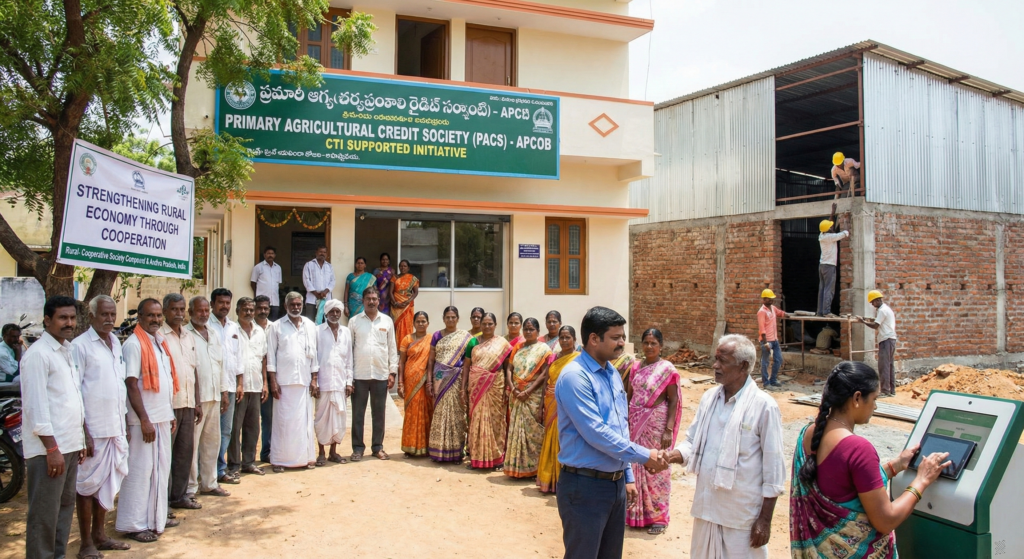
In the cooperative banking hierarchy, the Primary Agricultural Credit Society (PACS) is the most critical link. While the State Co-operative Bank (APCOB) and District Co-operative Central Banks (DCCBs) provide the framework, it is the PACS that touches the life of the individual farmer. Strengthening PACS is not just a financial necessity; it is a socio-economic imperative to ensure the resilience of our rural economy.
1. Digital Transformation: The Computerization Initiative
The most significant hurdle for PACS has historically been a lack of transparency and real-time data. The ongoing National Project for Computerization of PACS is changing this.
Common Accounting System (CAS): Implementing a unified ERP system across all PACS ensures that every transaction is recorded transparently, reducing the scope for errors and audit delays.
Real-Time Integration: By linking PACS directly with DCCBs and APCOB, we can ensure faster credit appraisal and seamless disbursement of interest subvention and subsidies directly to the farmer’s account.
2. Diversification: Becoming Multi-Service Centers
A “strong” PACS is a “diversified” PACS. To remain financially viable, societies must move away from a mono-line business of crop loans. The New Model Bye-Laws have opened the door for PACS to engage in over 25 functional areas:
Common Service Centers (CSCs): PACS can now offer over 300 digital services, including Aadhaar updates, insurance, and travel bookings, creating a steady stream of non-interest income.
Custom Hiring Centers (CHCs): Small farmers cannot afford expensive drones, harvesters, or tractors. A strengthened PACS can purchase this machinery and rent it to members at nominal rates, promoting mechanized farming.
Energy and Storage: From setting up solar power plants to building scientific warehouses under the “World’s Largest Grain Storage Plan,” PACS are becoming the logistics hubs of rural India.
3. Governance and Human Capital
Infrastructure and software are only as good as the people who manage them. Strengthening PACS requires a focus on professionalization:
Capacity Building: Through the APCOB Co-operative Training Institute (CTI), secretaries and board members are being trained in modern management, digital literacy, and statutory compliance.
Democratization: Ensuring active participation of all members in the General Body meetings and maintaining a transparent electoral process is vital for the long-term health of the society.
4. Regulatory Reforms and Policy Support
The introduction of Model Bye-Laws and the creation of a dedicated Ministry of Cooperation have provided the legal teeth needed for this strengthening. These reforms allow PACS to act as distributors for LPG, petrol pumps, and even fair-price shops, ensuring they remain the central economic hub of the village.
The Path Forward
Strengthening PACS is an investment in the future of the Indian farmer. As these grassroots institutions become more transparent, professional, and diversified, they will not only provide credit but will also provide the security and services necessary for a truly Atmanirbhar (Self-reliant) village.